Home » Festive Fun for Little Hands

Festive Fun for Little Hands

Simple Recipes, Crafts, and Decorations for Toddlers to Kindergarteners

(With a Few Ideas for Infants Too!)

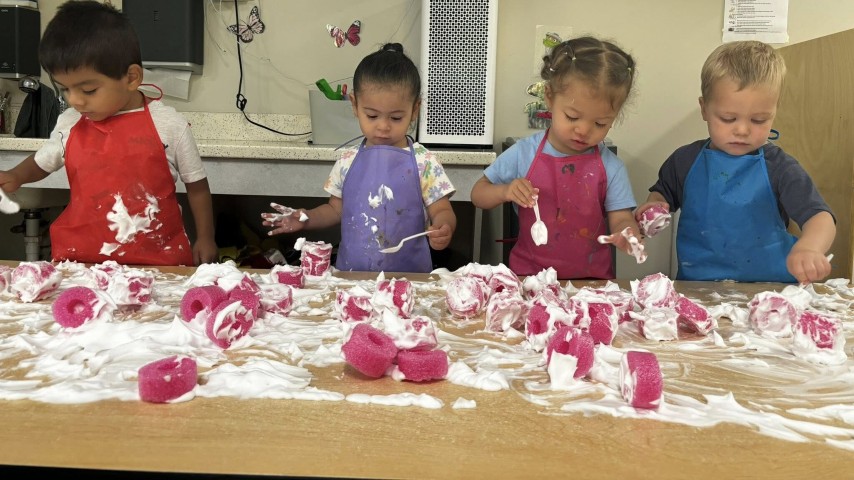
December is full of sparkle and excitement—but also plenty of to-do lists.  This year let’s make time for what really matters: fun, connection, and hands-on creativity with your little ones. These simple ideas are perfect for families with young children and don’t require fancy supplies or hours of prep. Whether you have a curious toddler or a crafty kindergartner (or even a baby who wants in on the fun!), we’ve got something festive for everyone.

🎅 Easy Holiday Crafts for Little Hands

  1. Cinnamon Stick Reindeer – Glue googly eyes and a red pom-pom nose onto a cinnamon stick. Add pipe cleaner antlers twisted into shape. (You can tape on string to turn it into an ornament!)
  2. Paper Strip Trees – Cut green paper into strips of different lengths. Let your child glue them into a triangle tree shape onto cardstock. Add stickers or fingerprints as ornaments.
  3. Handprint Wreaths – Trace your child’s hand on green paper several times, then cut out the shapes and glue them in a circle on cardstock or a sturdy paper plate base. Let them decorate with pom-poms or paper “berries.
  4. Tinfoil Star Ornaments – Cut stars out of cardboard, wrap in foil, and let your child decorate with stickers or permanent markers. Tape on a loop of ribbon to hang.
  5. Infant Idea: Sensory Color Bag Tree – With adult supervision, put a few spoonfuls of green-tinted yogurt or colored applesauce into a zip-top bag (you can use spinach purée or add a little natural food coloring). Add soft items like cut-up foam shapes or bits of felt. Seal tightly and tape the bag into a highchair tray. Your baby can smoosh and explore the textures and colors, no mess, no worries.

🎁 Festive DIY Decorations

  1. Pom-Pom Garland –Let your child thread colorful pom-poms onto yarn using a plastic needle or blunt tip. Tie a knot at one end so they don’t slip off. As they work, talk about patterns or let them create their own. When finished, tie the other end and hang it across a window, doorway, or mantle.
  2. Snowflake Window Clings – Use puffy paint to draw snowflakes on wax paper. Let them dry completely, then gently peel off and press onto windows like stickers.
  3. Cotton Ball Santa – Cut out a Santa face and let your child glue on cotton balls for the beard and hat trim.
  4. Pinecone Ornaments – Collect pinecones, dab with white paint, and add glitter. Tie a ribbon at the top for hanging.
  5. Infant Idea: Soft Ornament Basket – Fill a small basket with soft, non-breakable ornaments and other sensory-safe items for babies to explore (with supervision).

🍬 No-Fuss Recipes to Make (or Pretend to Make!)

  1. Reindeer Snack Cups – Fill a paper cup with trail mix or cereal. Glue on googly eyes, a red pom-pom nose, and tape on pipe cleaner antlers.
  2. Mini Graham Cracker Houses – Use graham cracker squares and frosting to build a tiny house. Let your child decorate with mini marshmallows, sprinkles, and cereal.   Tip: Use a plastic knife or butter knife to help spread the frosting—great for little hands!
  3. Marshmallow Snow people – Stack 2 or 3 marshmallows onto a pretzel stick to form the body. Gently press the pointy end of mini chocolate chips into the top marshmallow to make eyes (the soft marshmallow holds them in place). Wrap a thin strip of fruit leather around the “neck” for a scarf. Optional: use a food-safe marker to add a smile or buttons!
  4. No-Bake Oat Balls – Mix 1 cup oats, ½ cup peanut butter (or sunflower seed butter), ¼ cup honey, and a handful of chocolate chips. Roll into balls and refrigerate for 20 minutes.
  5. Infant Idea: Applesauce Stir & Taste – Peel and dice 4–5 apples, simmer in a pot with a splash of water and cinnamon until soft. Mash and cool before letting the baby taste. Older siblings can help stir!

🎄 Parent Tip:
These activities don’t have to be perfectly fun. Set up a few choices in a basket and let your child pick what they want to do. Turn on music, sip hot cocoa, and join the fun (even if it gets messy).

At Ecole 360 Child Development Center, we love helping children learn through play, creativity, and connection. Want to see how we celebrate the season with our families? Schedule a tour today!

Latest Posts

Sample Daily Schedule — Toddlers

Times are anchors, not alarms. The rhythm is the same every day; the pace follows the children.

Time Moment What Happens
6:30 AM Arrival & Welcome Greeted by name, hellos chosen at the Greetings Menu, jobs claimed, and the day's headline read.
8:30 Breakfast Fresh, organic food at a shared table. Manners and healthy habits are taught here, not assumed.
9:00 Morning Spark The week's theme opens, the big question, the read-aloud, and the day's first wondering.
9:20 Work Time & Small Groups Language & Literacy · Math & Science Discovery · Reading & Story · Art & Creative Expression · Real-Life Skills. Interest areas stay open all week.
Daily Enrichment One every day, Sign Language · Spanish · Yoga · Orff-Inspired Music · French, five enrichments across the week.
Morning Outside Time 20–30 minutes by rotation, or our indoor movement space when the weather keeps us in.
11:45 Lunch Fresh, organic food. Trying something new is celebrated, "no thank you" is respected, and children clear their own places.
12:20–2:30 Rest & Quiet Time Bodies rest. Early risers read, draw, and work quietly beside them.
2:30 Waking & Small Groups Slow waking at each child's own pace, cots away by their own hands, then small groups.
3:00 Afternoon Snack The third meal of the day, fresh fruit and whole foods, poured and passed by the children.
Afternoon Outside Time 20–30 minutes by rotation, or our indoor movement space.
3:30 Twilight — Wind-Down The day closes: what we noticed, what we made, and one quiet piece of work.
Until 6:00 PM Choice Time & Goodbyes Interest areas stay open, families greeted and updated at the door, and every departure by name.
6:30 AM
Arrival & Welcome
Greeted by name, hellos chosen at the Greetings Menu, jobs claimed, and the day's headline read.
8:30
Breakfast
Fresh, organic food at a shared table. Manners and healthy habits are taught here, not assumed.
9:00
Morning Spark
The week's theme opens, the big question, the read-aloud, and the day's first wondering.
9:20
Work Time & Small Groups
Language & Literacy · Math & Science Discovery · Reading & Story · Art & Creative Expression · Real-Life Skills.
Daily
Enrichment
One every day, Sign Language · Spanish · Yoga · Orff-Inspired Music · French.
Morning
Outside Time
20–30 minutes by rotation, or our indoor movement space when the weather keeps us in.
11:45
Lunch
Fresh, organic food. Trying something new is celebrated, "no thank you" is respected.
12:20–2:30
Rest & Quiet Time
Bodies rest. Early risers read, draw, and work quietly beside them.
2:30
Waking & Small Groups
Slow waking at each child's own pace, cots away by their own hands, then small groups.
3:00
Afternoon Snack
The third meal of the day, fresh fruit and whole foods, poured and passed by the children.
Afternoon
Outside Time
20–30 minutes by rotation, or our indoor movement space.
3:30
Twilight — Wind-Down
The day closes: what we noticed, what we made, and one quiet piece of work.
Until 6:00 PM
Choice Time & Goodbyes
Interest areas stay open, families greeted and updated at the door, and every departure by name.
Throughout the day: diapering every two hours and whenever needed · bathroom whenever asked · potty training follows each child's individual plan

ORFF Music

Inspired by the Orff Schulwerk approach developed by German composer and educator Carl Orff, children explore music through movement, rhythm, singing, storytelling, and hands-on musical experiences. The program supports creativity, self-expression, communication, listening skills, and social development while fostering a lifelong appreciation for music.

Fun Fact: The Orff approach teaches music the same way children learn language—through exploration, imitation, movement, and play.

Yoga & Mindfulness

Through yoga, mindfulness, meditation, and breathing techniques, children develop focus, balance, self-regulation, and emotional well-being. Beginning in our youngest classrooms, these practices help children build healthy habits that support both physical and mental wellness throughout life.

Family Feedback: Many families share that children bring these techniques home, using breathing exercises and mindfulness strategies independently in everyday situations.

French & Spanish

Through engaging, age-appropriate experiences, children are introduced to new languages and cultures while developing communication skills, confidence, and global awareness. Early exposure to multiple languages also supports cognitive development, problem-solving, creative thinking, and executive functioning skills.

Fun Fact: Children can naturally acquire multiple languages simultaneously during early childhood. Research suggests that young children have the remarkable ability to learn several languages with native-like proficiency when exposed consistently from an early age.

Sign Language

Introduced beginning in our infant program, sign language helps children communicate their needs, reduce frustration, build confidence, and support early language development.

Fun Fact: Research shows that sign language can strengthen communication skills and support language development long before children are able to express themselves fully with words.